
Property Preparation and Professional Quality Standards
The actual performance of a tourist accommodation begins well before receiving the first booking. It starts with the condition of the property, the feeling it conveys, the ease of use of each room, the cleanliness perceived by the guest at first glance, and the absence of small faults that ultimately damage the experience, reputation, and profitability.
Transforming a regular residence into a competitive tourist accommodation is not about decorating it hastily or filling the advertisement with promises. It involves professionalizing the product: reviewing habitability, reinforcing safety, creating real comfort, facilitating the stay, reducing operational incidents, and designing a standard capable of sustaining good ratings consistently.
This chapter will help you prepare the property with a rigorous and practical vision, considering the guest, daily operations, commercial photography, asset protection, and medium- and long-term profitability.
Many properties fail not because they are small, old, or simple, but because they are thought of as private homes and not as tourist products. The difference is profound. A private residence can tolerate improvisation, the owner’s habits, or poorly resolved areas. A tourist accommodation, on the other hand, must function intuitively for people who do not know it, who arrive tired, who compare it with other accommodations, and who quickly judge each detail.
The professional preparation of the property should pursue five simultaneous objectives: meet the basics, avoid incidents, provide comfort, convey confidence, and facilitate a repeatable operation. When these five pillars align, the accommodation truly begins to compete.
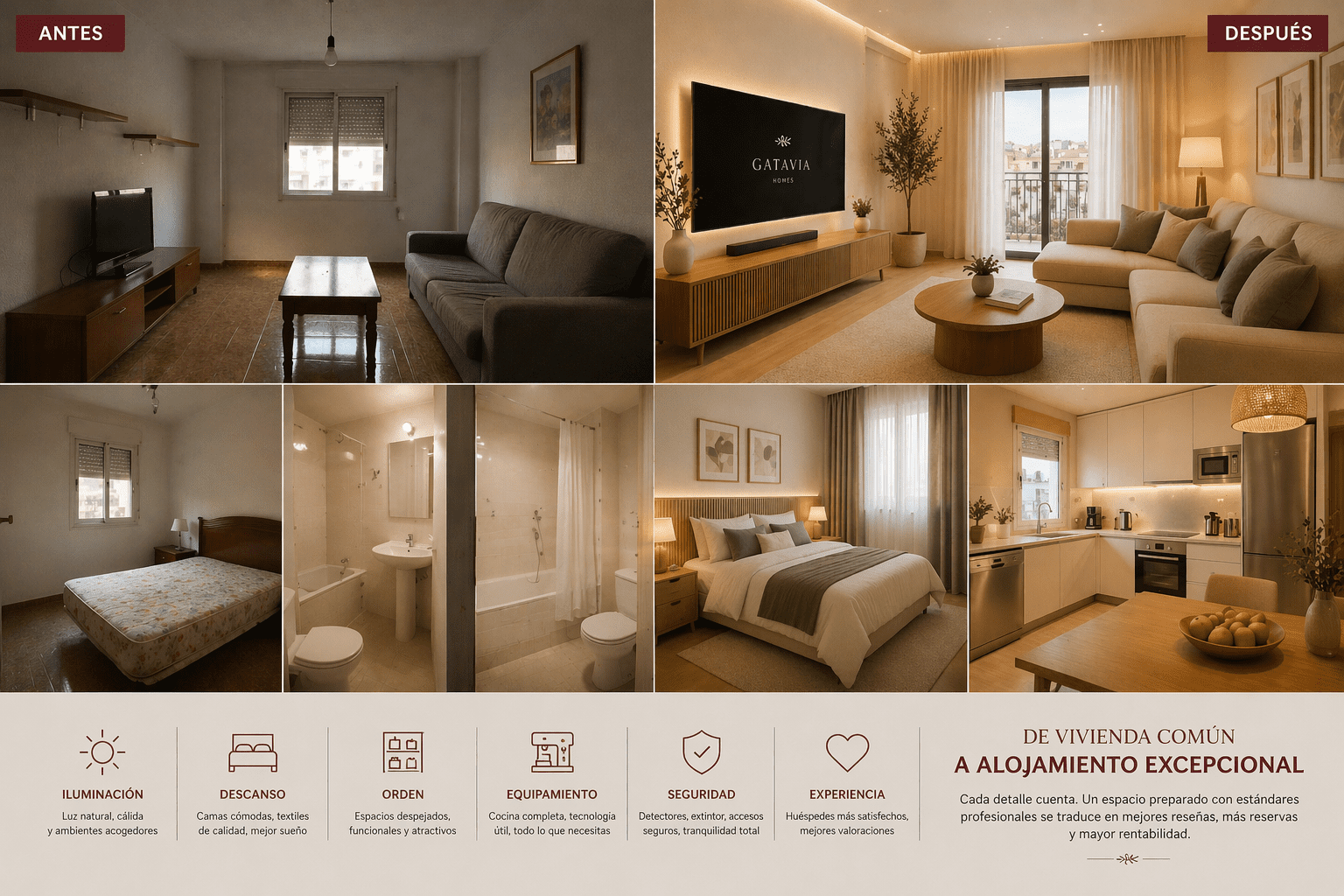
Before buying furniture, textiles, or decoration, it is advisable to conduct an honest audit of the property’s condition. It is an unglamorous but decisive phase. Investing in presentation without resolving structural, comfort, or maintenance issues usually translates to poor early reviews and duplicated expenses.
The initial review should focus on four areas: habitability, conservation, functionality, and perception. It is not enough for something to just "work"; it must work well in a frequently rotating and intensive-use environment.
Expert advice: before investing in decoration, allocate budget to eliminate humidity, noise, bad odors, loose doors, defective faucets, dark spots, and visible deterioration. In terms of reputation and experience, these improvements often have much more impact than any decorative element.
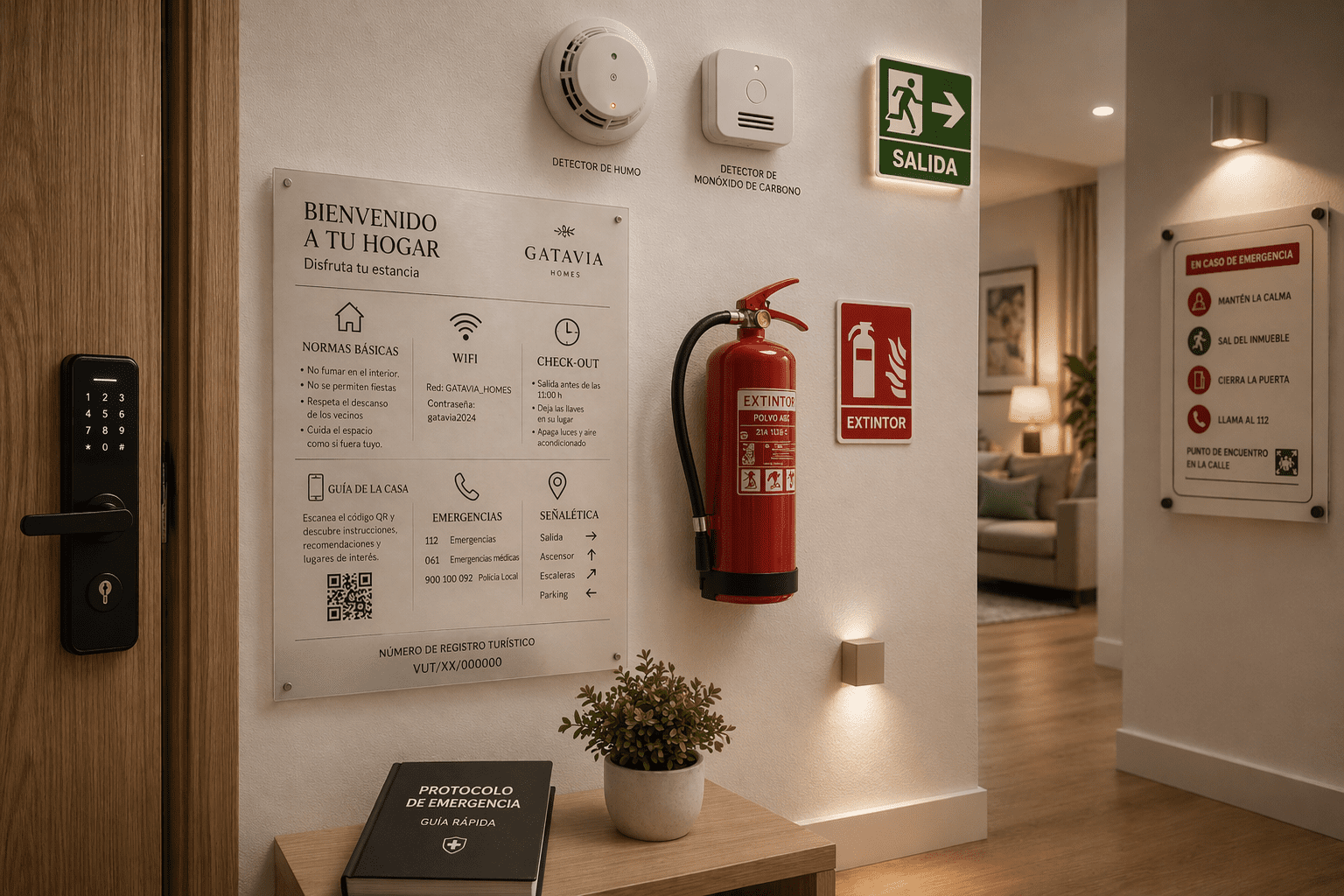
Safety should not be treated as a formality. In addition to the obligations that may correspond according to the applicable regulations in each territory, there is a layer of operational and preventive safety that distinguishes the improvisational host from the serious manager. The important thing is not just to comply, but to anticipate incidents and reduce consequences.
- Accessible fire extinguisher in proper inspection condition, when required or appropriate as a basic safety measure.
- Smoke detector correctly installed in suitable areas.
- Carbon monoxide detector if gas exists or devices whose presence makes it prudent.
- Electrical panel in good condition and free from improvisations or dangerous plugs.
- Windows, doors, and closures secure, especially on exterior accesses, terraces, or balconies.
- Essential internal information visible when appropriate: emergencies, rules, and required identifying data.
- Reinforced lock or smart access system with code control.
- Fire blanket in the kitchen and clear procedures for handling small incidents.
- Basic emergency kit with flashlight, batteries, and useful contacts.
- Protected power strips, organized wiring, and total absence of makeshift solutions.
- Discreet but clear internal signage to facilitate use and reduce unnecessary calls.
- Specific risk assessment if the property has stairs, pool, high terrace, fireplace, or special features.
In practical terms, safety also has a reputational dimension: a guest perceives safety when the entrance is clear, the lighting works, the closures convey trust, the equipment is not deteriorated, and the property is prepared to resolve an incident without chaos. This feeling reduces anxiety, enhances the experience, and conveys professionalism.
There are aspects that rarely appear in the advertisement strongly enough but decisively condition the final evaluation. One of them is thermal comfort. Another is acoustic tranquility. And another is the feeling of clean air and a healthy home. They are silent factors, but very determining.
The property must offer a climate control solution consistent with the area, the usage time, and the expected guest profile. It is not enough to have an installed system: it must work well, be easy to use, and be accompanied by clear instructions. Complex or confusing controls generate calls, frustration, and disproportionately negative reviews.
It is advisable to periodically check filters, noises, controls, batteries, drains, and actual response of the systems. The guest's perception does not distinguish between 'old equipment' and 'insufficient maintenance': they simply judge whether they are comfortable or not.
A tourist home must smell clean, not like products, humidity, being closed, plumbing, or accumulated kitchen odors. Real ventilation, proper extraction in the bathroom and kitchen, the absence of mold, and the correct cleaning of textiles and filters are part of the quality of the accommodation as much as the decoration.
In properties with less natural ventilation, it is advisable to reinforce the inspection of odors, damp spots, joints, partitions, drains, and closets. The guest perceives a stuffy environment in just a few minutes, and this penalizes much more than the owner usually imagines.
Sleeping well and resting without noise is one of the greatest positive valuation levers. The environment cannot always be changed, but reasonable improvements can be applied: weather strips, heavier curtains, carpets, stoppers, checking closures, absorbing solutions, better window fitting, and reducing interior noise from doors, chairs, beds, or appliances.
When a property has acoustic sensitivity, it is also advisable to manage it commercially: do not overpromise absolute silence, reinforce coexistence rules, and better select the type of guest that may fit with the home.
The furniture in a tourist home should not be chosen as if it were a private residence or as if it were a display. It must respond to a much more demanding balance: withstand intensive use, look good in photographs, be easy to clean, and remain comfortable over time. A beautiful but fragile piece of furniture is a problem. A robust but visually poor piece of furniture can devalue the listing. The goal is to find honest, practical pieces that are coherent with the positioning of the accommodation.
Much of the overall valuation is decided here. The mattress must provide real rest and convey a sense of cleanliness and care. Pillows, bedding, bed height, access to outlets, and the ease of darkening the room matter much more than they seem.
There must be sufficient capacity to store belongings, hang clothes, and move comfortably. The ideal tourist bedroom is not cluttered: it is clear, balanced, and designed for good sleeping.
The living room should allow for rest, gathering, and intuitive use. An insufficient sofa for the advertised capacity generates immediate dissonance. The lighting should combine general light and a warmer or ambient light. The television, if included, should be well placed and ready to use without complications.
It is also advisable to review the circulation: overly large tables, uncomfortable corners, or decorative elements that obstruct worsen the spatial feeling and harm both the experience and the photography.
The tourist kitchen must be designed for real use, not symbolic. Although many guests do not cook daily, they expect to be able to have breakfast, reheat, prepare something simple, or feel autonomous. Essential appliances, provided cookware, useful knives, internal order, and impeccable cleanliness are fundamental.
The major mistake is to equip a kitchen that seems complete but fails in the basics: insufficient cutlery, worn pans, mixed drawers, a coffee maker without instructions, or a refrigerator with a bad smell. The kitchen must resolve and not generate incidents.
The bathroom is one of the areas that weighs most heavily on the perception of cleanliness and maintenance. It must be impeccable, with no dark joints, no neglected faucets, no deteriorated silicone, no odors, and with good lighting. The hairdryer, accessories, water pressure, and drainage are also part of the experience.
A simple bathroom can be highly valued if it is spotless and well-designed. A seemingly modern bathroom can severely undermine the perception of the accommodation if it conveys wear or neglect.
Textiles are one of the most sensitive elements in the guest experience because they are touched, seen up close, and automatically associated with hygiene, comfort, and care. The bed, towels, curtains, mats, or even kitchen cloths immediately communicate the level of quality.
Here, it is advisable to avoid two common mistakes: saving too much on visible textiles or selecting beautiful but impractical pieces. The professional standard seeks a balance between texture, durability, ease of washing, simple replacement, and continuous good appearance.
Recommended approach: to work with a small system of rotating textiles, with enough backup for complete changes, periodic checks, and agile replacement. The key is not only to have beautiful textiles but to maintain them always at the same level of presentation.
Essential equipment is the set of items that do not generate admiration when present, but do cause many complaints when missing or malfunctioning. It is the silent service layer of the accommodation. The better it is resolved, the less operational friction you will have and the more professionalism the property will convey.
- ✓ Stable and usable WiFi throughout the property, not just at a specific point.
- ✓ Heating or cooling system appropriate to the reality of the property.
- ✓ Kitchenware, utensils, and basic cleanliness allowing for a functional stay.
- ✓ Iron, board, and minimal solutions for organizing clothes or luggage when the guest profile justifies it.
- ✓ Reasonable recycling and waste management system.
- ✓ Simple, useful courtesy kit consistent with the accommodation's positioning.
- ✓ Clear information so that the guest can use the property without feeling lost.
In tourist accommodation, guests highly value that everything is easy: connecting to WiFi, finding a functional coffee maker, using air conditioning, understanding where to throw out the garbage, knowing how to exit or what to do if an incident arises. Operational comfort is part of the product.
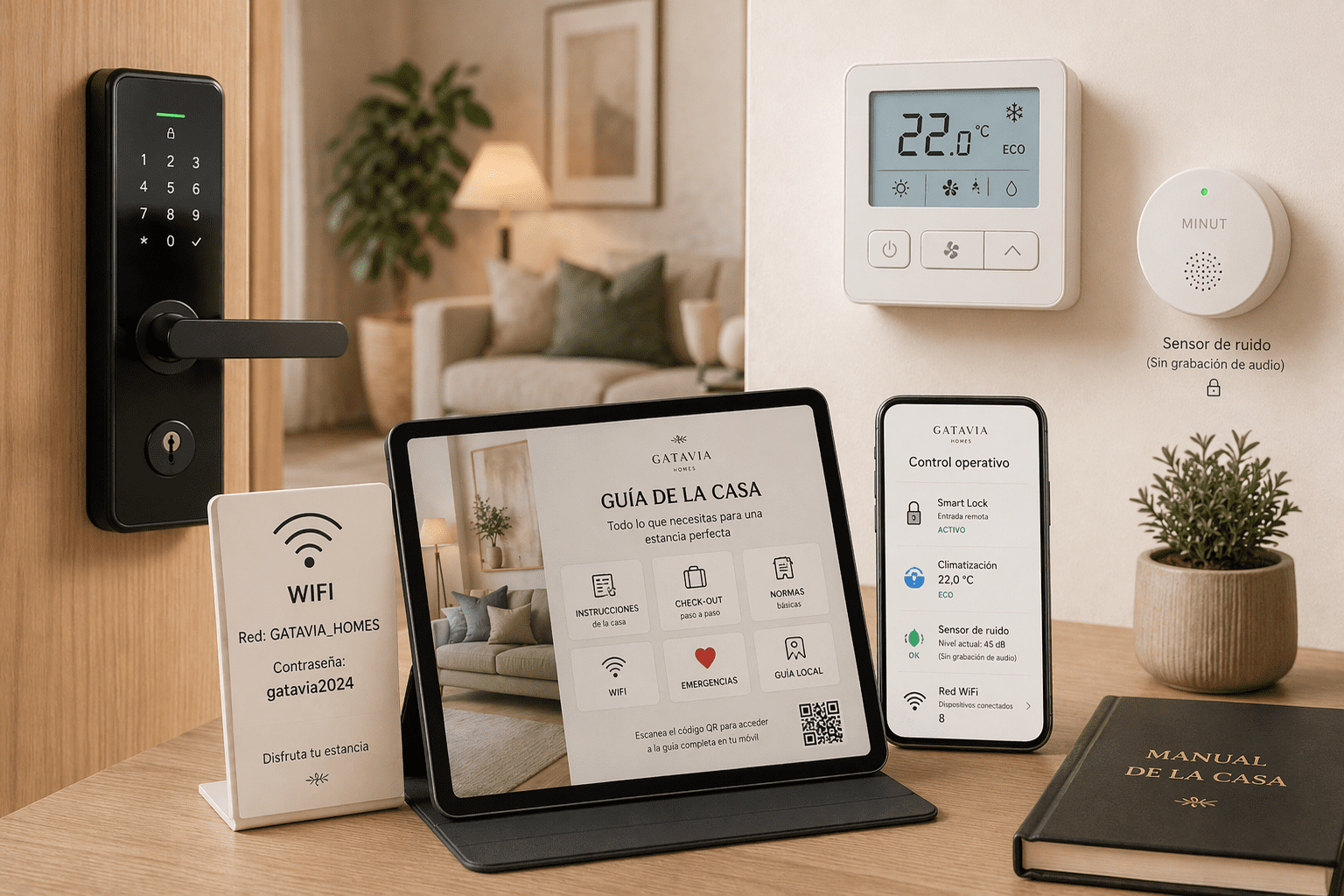
Technology must have a clear aim: to facilitate access, control, comfort, and operation. When technology is well implemented, it saves time, reduces incidents, and enhances the experience. When installed without criteria, it adds friction, dependence, and support problems.
- Well-configured autonomous access with backup in case of failure.
- Solid connectivity with adequate coverage.
- Privacy-respecting noise sensors when the operational context advises it.
- Simple lighting and automation that do not require complex learning.
- Installing systems without a backup plan if the battery, router, or connection fails.
- Accumulating devices that the guest does not understand or need.
- Creating dependencies on unnecessary apps, steps, or keys.
- Not testing the complete experience as if you were a real guest arriving for the first time.
The best technology in tourist housing is the one that goes unnoticed because it works, simplifies, and reduces human intervention without jeopardizing the experience. If an intelligent system requires too much explanation, it is probably not completely well resolved.
In tourist housing, cleaning is not just another operational phase: it is a central part of the product. The guest perceives it in seconds and uses it as a criterion to judge everything else. If they find dust, hair, odors, a dirty fridge, or a shower door with marks, they will no longer evaluate the rest neutrally. The cleaning standard shapes trust.
There must be a complete and repeatable protocol: textiles, bathroom, kitchen, surfaces, floors, fridge check, emptying, odors, final staging, and visual checks from the guest's perspective. Cleaning is not just executing tasks; it is ensuring that the accommodation is in reception mode.
In addition to operational changes, it is advisable to schedule deep cleaning with a preventive criterion: filters, hood, joints, auxiliary textiles, mattresses, upholstery, glass, corners, mechanisms, and high or less visible elements. The lack of this layer eventually surfaces in reviews over time.
A professional standard is not just based on trusting that someone has cleaned well. It requires a checklist, final review, defined criteria, and, when the operation justifies it, visual support or additional verification. Professional cleaning needs a system, not just good intentions.
Well-understood sustainability in tourist housing does not consist of filling the accommodation with green messages, but rather in reducing consumption, facilitating responsible use, and choosing more efficient solutions without harming the experience.. When done well, it improves margins, simplifies replenishments, and enhances the accommodation's image.
Efficient lighting, reasonable climate control, refillable amenities, elimination of unnecessary waste, well-resolved recycling, preventive maintenance to avoid leaks or excessive consumption, and brief messages that encourage collaboration without generating rejection.
Limiting comfort so much that the guest perceives cuts, using sustainable but ineffective products, communicating in a moralistic way, or implementing solutions that complicate cleaning, maintenance, or the user experience.
Simple and friendly communication usually works better than an imposing message: thanking for the responsible use of water, energy, or recycling conveys more professionalism than giving long or uncomfortable orders to the guest.
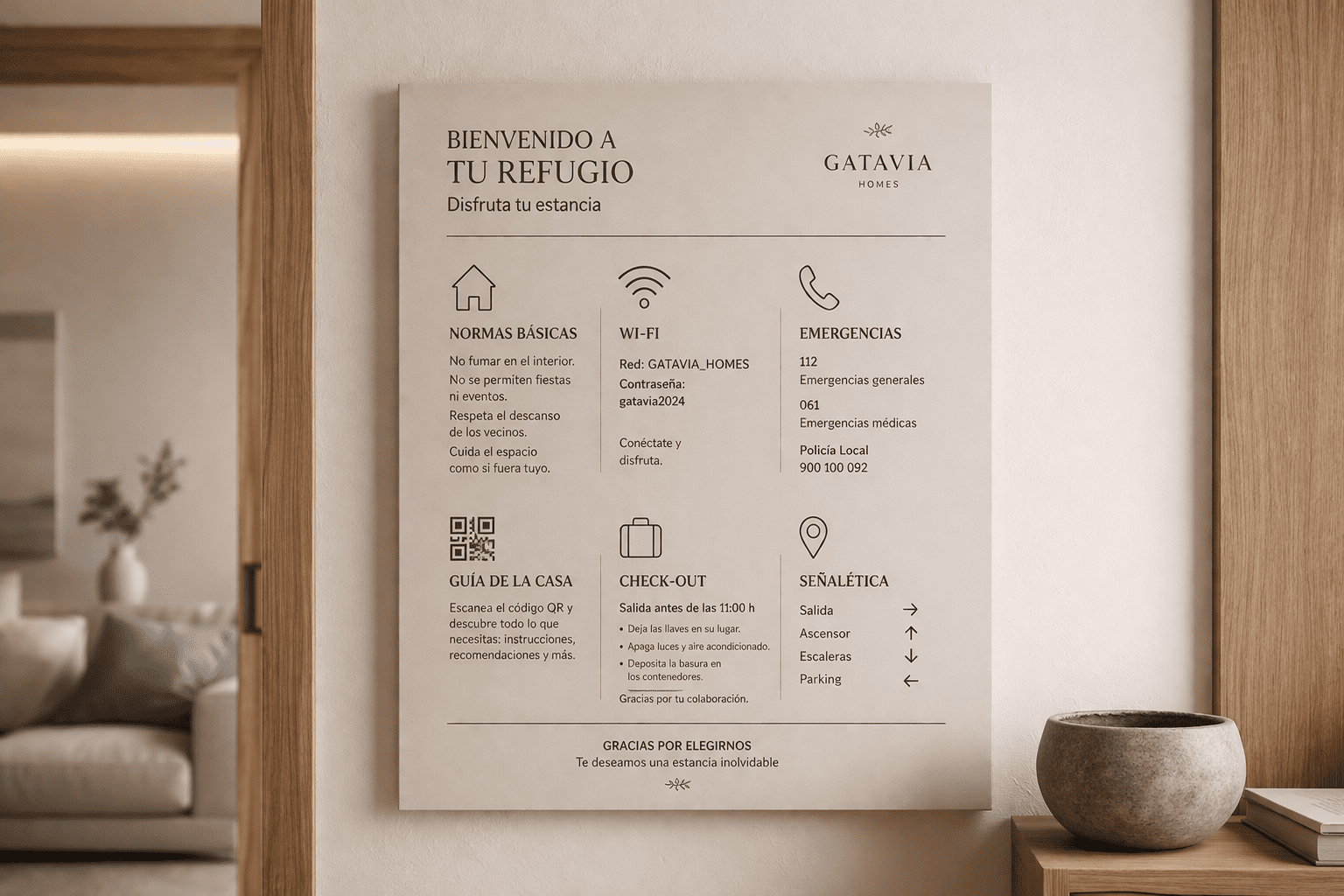
The interior documentation is not an embellishment. It is a tool for guest experience, operations, and prevention. When well designed, it reduces repetitive questions, lowers the risk of misuse of equipment, facilitates check-out, improves coexistence, and conveys organization. When poorly made, it becomes visual noise.
Access to WiFi, basic use of equipment, essential rules, emergencies, exit instructions, waste management, useful recommendations, and quick access to a broader house guide if you use it in digital format.
Minimal text, direct language, professional tone, good readability, logical layout, and clean design. The interior signage should assist, not invade the aesthetics or create a feeling of saturation.
In practice, a combination of minimal visible pieces and a more comprehensive central guide, accessible via QR or simple link, works best. This way, you maintain visual order without sacrificing informational depth.
A property can be well-equipped and still sell worse than it deserves if not presented correctly. Preparation for photography is not superficial makeup; it is a natural extension of the property's standard. The photos should show the property in its best version, but without creating misleading expectations.
The photoshoot also serves as an audit. If a room does not look good on camera, it is worth asking whether the problem is purely visual or if it truly needs improvement in lighting, order, furnishings, layout, or style.
Solid bed, comfortable rest, impeccable textiles, functional bedside tables, appropriate lighting, accessible outlets, ability to darken, absence of internal noise, and reasonable space for belongings.
Sufficient seating, comfortable circulation, pleasant lighting, functional support for eating or working if needed, good connectivity, and a constant feeling of visual order.
Operational appliances, sufficient crockery, clear instructions, deep cleaning, logical organization, and minimal consumables to avoid a sense of emptiness or abandonment.
Perfect cleanliness, adequate pressure, proper drainage, sufficient lighting, consistent towels, well-presented amenities, and absolute absence of visible deterioration.
Clear arrival, tested instructions, reliable lock or key delivery, access lighting, and a clean and professional first impression upon crossing the door.
- Investing in aesthetics before technical basis. Pretty paint does not compensate for dampness, noise, odors, or dubious installations.
- Furnishing with the owner in mind rather than the guest. Tourist accommodation demands usability, durability, and clarity.
- Neglecting the bed and bathroom. These are two decisive areas in any evaluation.
- Relying on "it will be explained to the guest later." If something requires too much explanation, the property is not fully well prepared.
- Overloading decoration. Overloaded decoration complicates cleaning, ages worse, and reduces the sense of order.
- Not defining a review standard among stays. Without a system, quality fluctuates and reputation does too.
- Publishing too soon. Opening the calendar without having the property actually closed can be costly in terms of reviews, incidents, and rushed adjustments.
A professional tourist accommodation is not improvised. It is built on correct decisions regarding the condition of the property, safety, comfort, equipment, cleanliness, documentation, and commercial presentation. Each of these elements directly influences guest satisfaction, operational ease, and the accommodation's ability to maintain a solid reputation.
Preparing the property well does not necessarily mean spending more, but spending better, prioritizing better, and standardizing better. A competitive accommodation is one that successfully addresses the essentials, conveys confidence from the first minute, and makes the stay an easy, comfortable, and consistent experience.
When the product is well worked from within, it becomes easier to sell, operate, defend its price, and obtain reviews that support its profitability. That is the true foundation of a serious tourist accommodation prepared to compete.