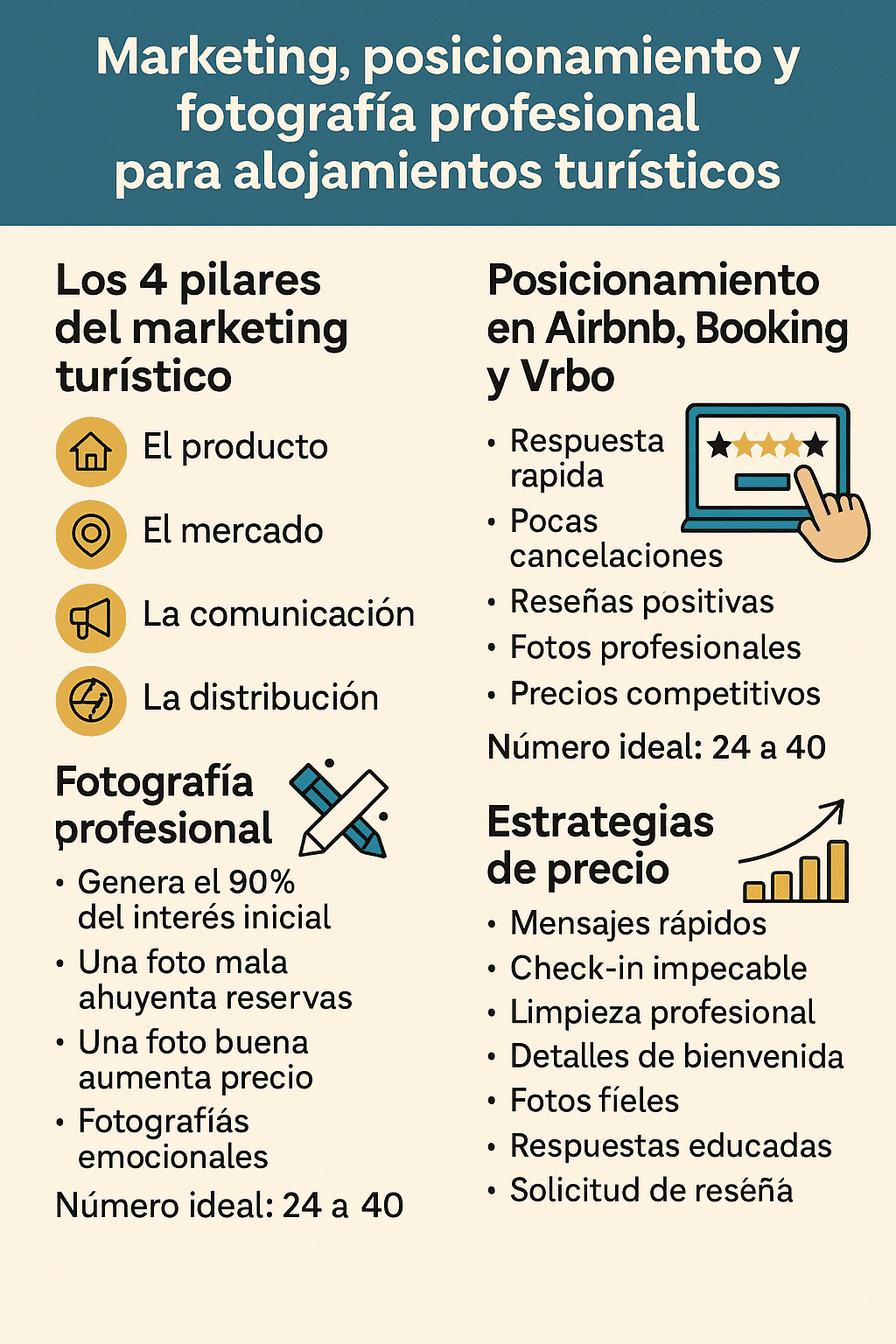
Marketing, Positioning, and Advertisement Optimization
How to Get More Reservations, Stand Out from the Competition, and Make Your Property an Irresistible Option
Marketing for a tourist property is not a decorative complement to the business; it is one of the key levers that most influences the visibility of the advertisement, the quality of bookings, and the final profitability of the accommodation. You can have an immaculate, well-equipped, and perfectly managed property, but if you do not know how to present, position, and sell it, you will compete poorly and end up relying too much on price.
In practice, the advertisement functions as the shop window for your accommodation. It is the point at which the traveler decides whether to enter, compare, trust, or keep scrolling. Therefore, optimizing it well does not just mean 'making it pretty,' but rather constructing a clear, professional, and persuasive proposal that increases clicks, improves conversion, and reduces doubts before booking.
When an advertisement is well crafted, it not only sells more: it also attracts the right guest better, communicates more value, helps sustain higher rates, reduces friction during the stay, and fosters better reviews. In other words, good marketing does not end with the booking: it improves the entire commercial and operational cycle of the accommodation.
The Three Pillars Supporting a Profitable Advertisement
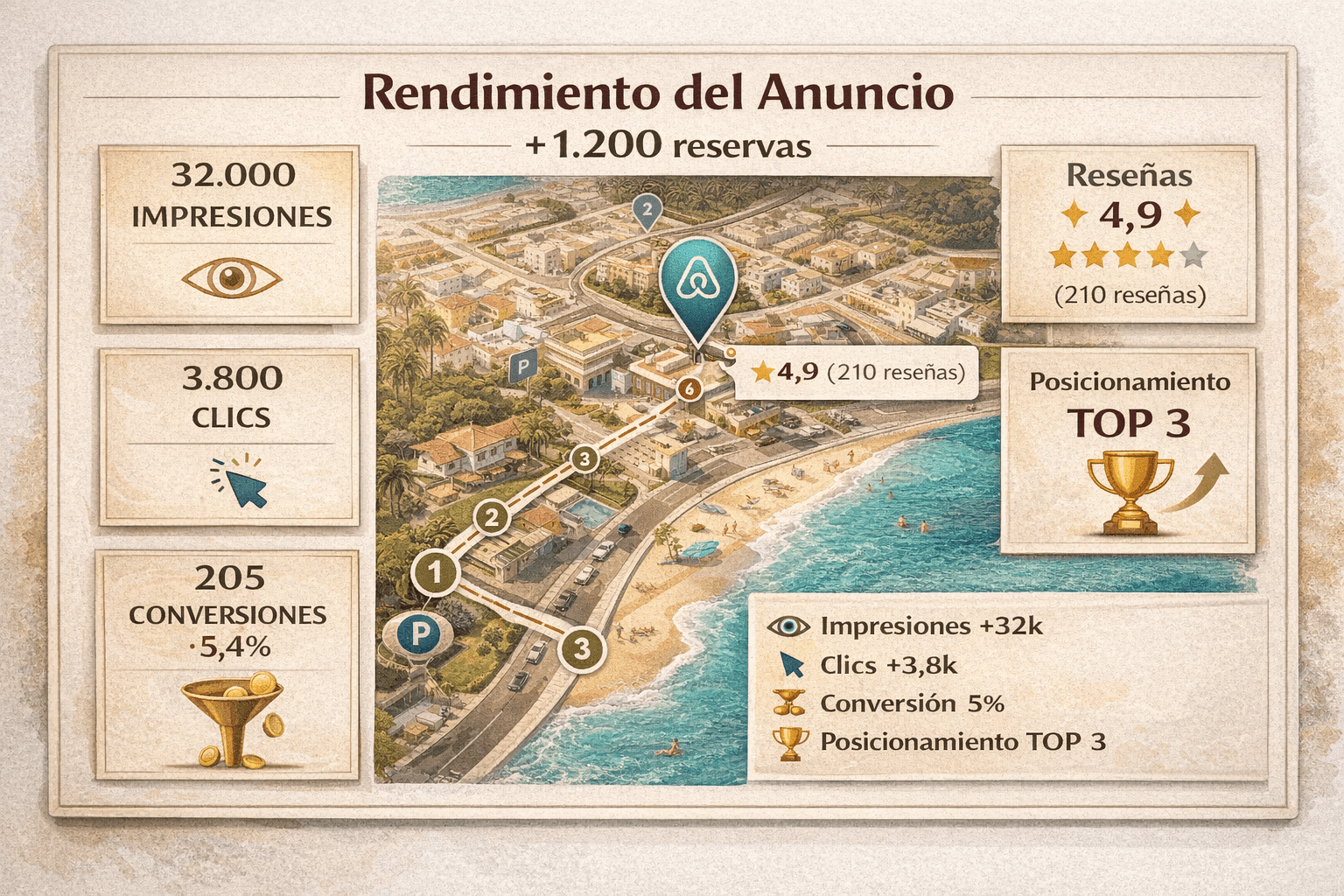
Marketing on tourist rental platforms rests on three fundamental pillars: visibility, conversion, and reputation. Visibility ensures you appear in the results; conversion ensures you are chosen; reputation ensures the algorithm continues to reward you and that future guests book with more confidence. Focusing on just one of these three pillars usually yields limited results. The most successful advertisements are usually balanced across all three.
The commercial logic is simple: first, you must get seen, then get people to enter, and lastly, get them to book. If you have few impressions, there is a problem with positioning or competitiveness. If you have impressions but few clicks, the cover, title, or apparent price might be failing. If you have clicks but no reservations, there is usually a problem with trust, clarity, value proposition, pricing strategy, or perceived experience.
How to Optimize an Advertisement to Stand Out from the Competition
Optimizing an advertisement is not about filling fields just to comply; it is about building a complete, coherent commercial profile that is better than most comparable advertisements in your area. You must think like both a guest and an operator at the same time. The guest wants to feel they have found a reliable, attractive, and suitable option for their trip. The platform wants to display advertisements that generate clicks, bookings, and good experiences. If you align both aspects, your positioning improves.
In practice, optimizing well means rigorously working on the value proposition, the cover photo, the quality of the photographs, the visual order of the content, the title, the description, the detail of the services, the clarity of the rules, the competitiveness of the price, and the speed of response. Everything adds up. And many times, it is not the best objective accommodation that wins, but the best presented.
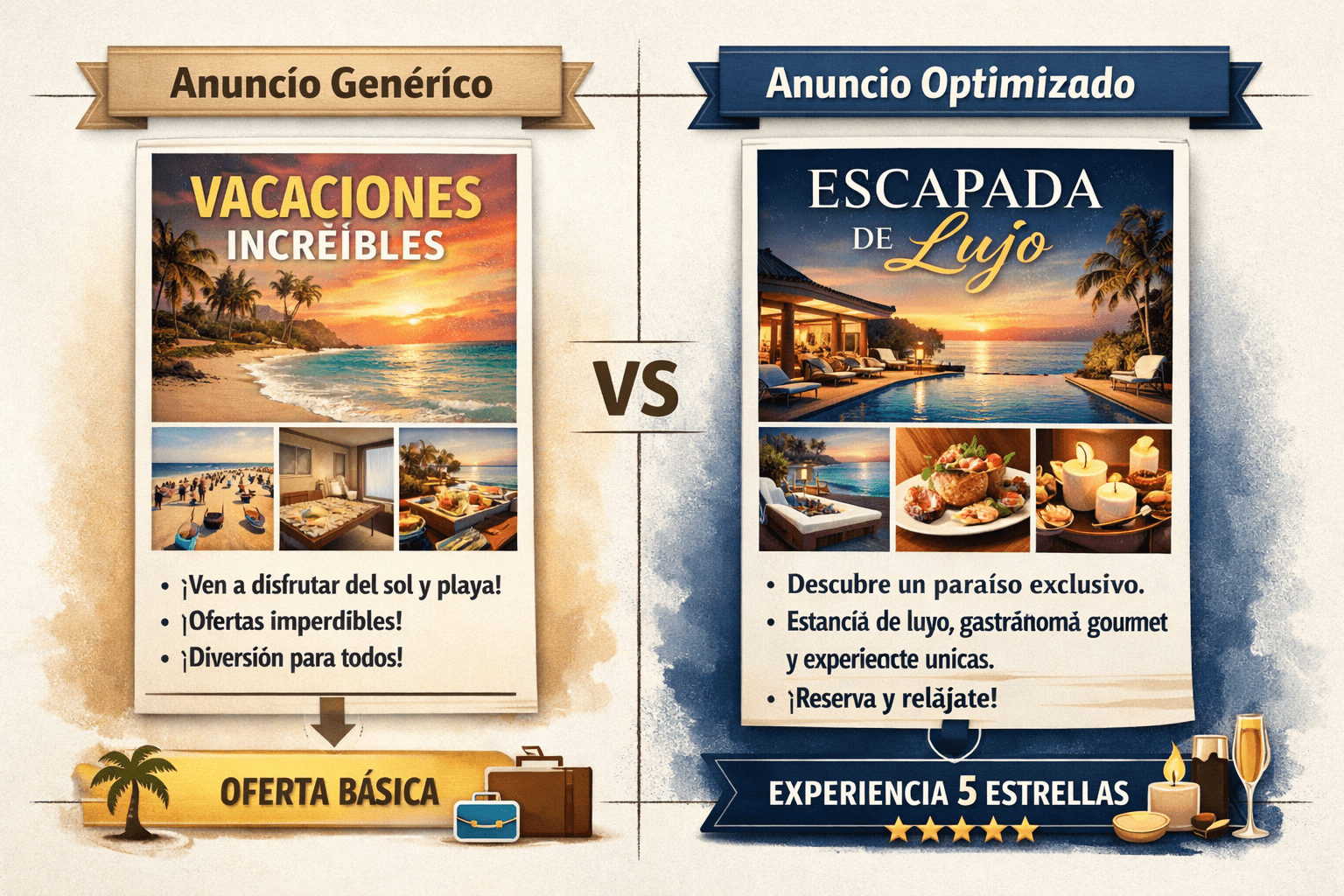
Professional photography: one of the investments with the highest return
Photos are, by far, one of the most important elements of a listing. They are the first attention filter and a decisive part of the booking process. The traveler cannot physically touch or walk through the accommodation, so the image must replace that experience and generate a clear sense of trust, order, spaciousness, cleanliness, and value.
Professional photography not only enhances the aesthetics of the listing: it improves the overall perception of quality of the accommodation. The same apartment can seem ordinary or premium depending on how it is photographed. Therefore, photography should be approached from a commercial logic, not just a technical one. It is not about "taking pretty photos", but about showing better what the guest values and helping them imagine their stay.
When the images are poorly resolved, the problem is not only visual. Clicks decrease, confidence drops, conversion worsens, and it becomes more difficult to maintain an appropriate rate. In contrast, when the shoot conveys order, space, light, and experience, the listing gains strength from the very first second.
The cover photo: the decision that can generate the most clicks
Not all good photos work as a cover. The main photo should be the image that best summarizes the value of the accommodation at first glance. It must work in a thumbnail, stand out against other nearby listings, and generate an immediate reaction of interest. Many times, the best artistic photo is not the best commercial photo.
It is advisable to review the cover as if you were a user on a mobile device, visually competing against twenty other accommodations. If it does not stand out clearly, it is probably not fulfilling its function. In some cases, a wide view of the living room may work better; in others, a powerful terrace, a well-maintained pool, or an exceptionally attractive bedroom. The response depends on the main value you want to sell.
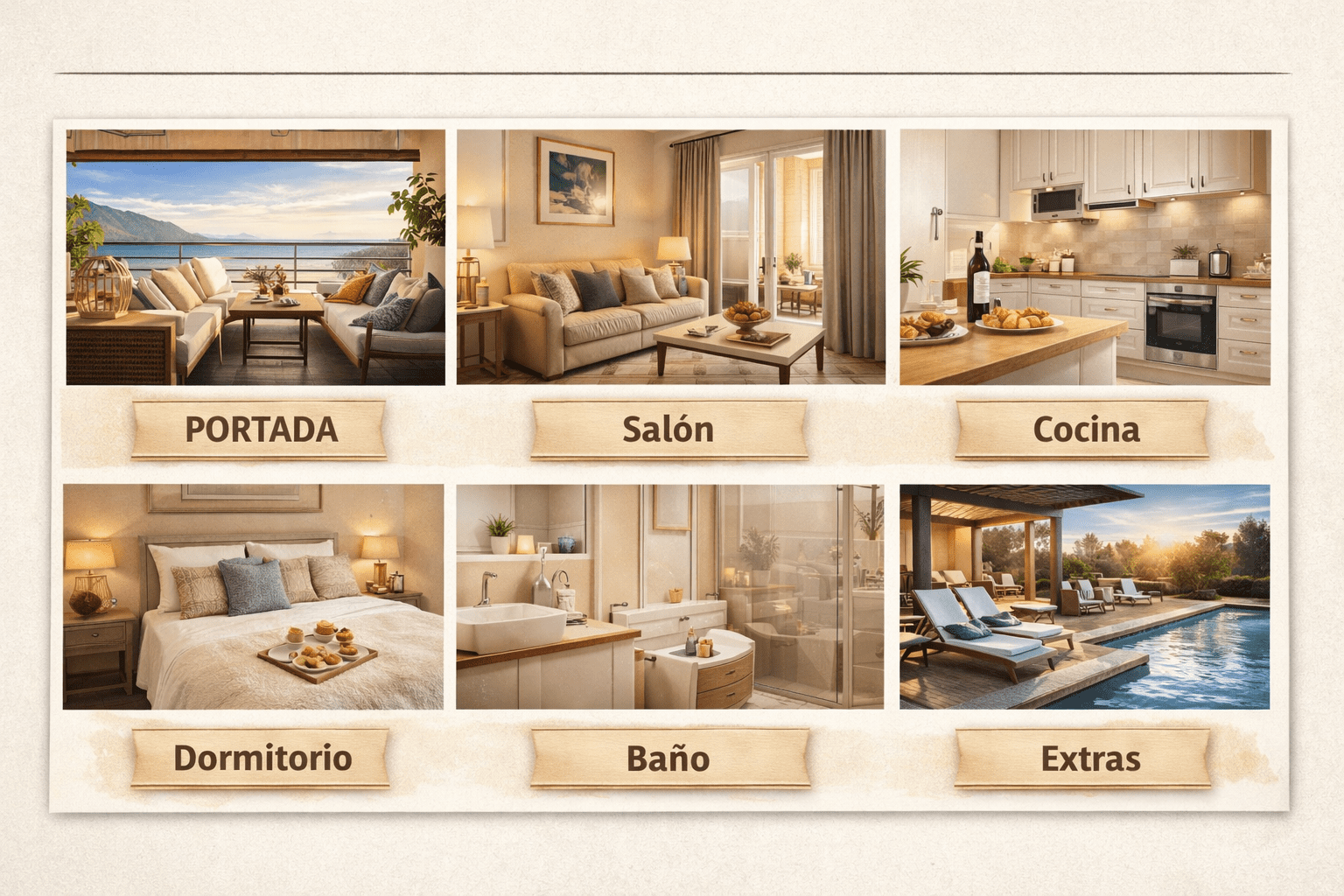
Perfect title for the listing
The title is a brief but very strategic piece. It must help the user understand what you offer and why it is worth clicking. It cannot be generic, vague, or interchangeable with hundreds of similar listings. It must combine clarity, appeal, and commercial orientation.
A good title does not try to tell everything. It selects the elements that add the most value and arranges them logically. Generally, it tends to work well to combine the type of accommodation, one or two clear strengths, a useful location reference, and, when it makes sense, a relevant differential value for the ideal guest.
Professional description: copywriting that informs, sells, and reduces doubts
The listing description must serve several functions at the same time. It must spark interest, clearly explain what you offer, reinforce the guest's trust, highlight your differentiators, and filter expectations professionally. It is not about writing a long text for the sake of it, nor about sounding poetic without providing anything practical. It is about guiding the buying decision with clarity.
The best description often mixes emotion and concreteness. First, it helps the traveler imagine the experience; then, it provides objective reasons to book; finally, it resolves doubts and makes the essential conditions clear. When this is done well, conversions rise, and many subsequent incidents decrease because the guest arrives with better-aligned expectations.
What should be said clearly to avoid bad bookings and negative reviews
A professional listing not only highlights the positive; it also intelligently communicates what the guest needs to know before booking. Hiding limitations may seem useful in the short term, but it usually translates into bad experiences, negative comments, and broken expectations. Well-written commercial transparency protects much more than silence.
There is no need to dramatize the limitations, but it is important to integrate them normally into the text: access without an elevator, difficulty parking at certain times, areas with nightlife, housing not adapted for certain profiles, interior steps, strict community rules, or certain capacity limits. The right guest will appreciate it; the wrong one will likely be filtered out before causing a problem.
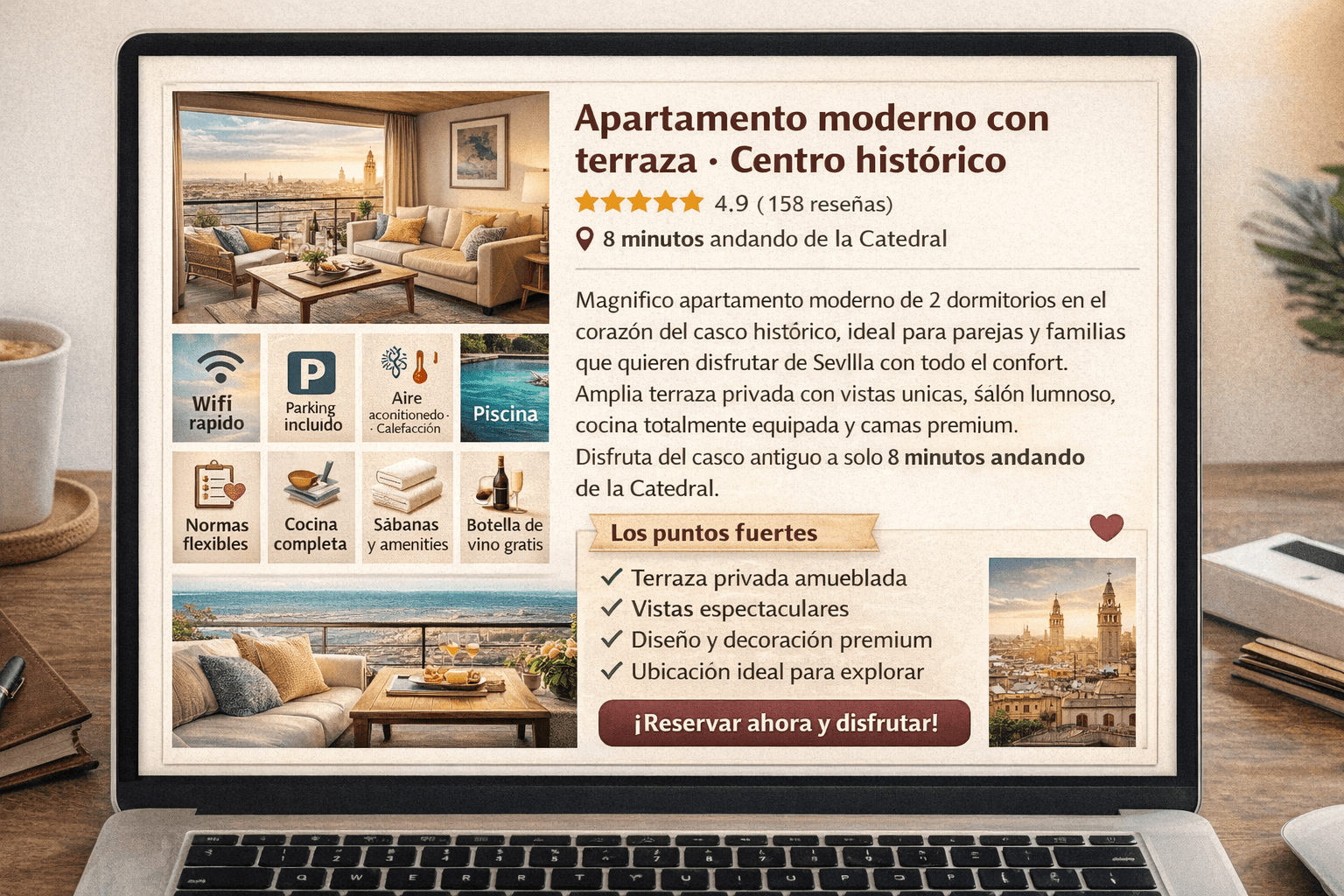
Location and neighborhood copy: selling the context also sells the stay
Many listings describe the area very little, and that is a mistake. The guest is not just booking a home: they are booking an experience situated in a specific environment. They want to know if there will be transportation nearby, if the neighborhood is comfortable, if there is atmosphere, if it is quiet, if they can eat well, if there are nearby supermarkets, and what kind of stay they can really expect.
Describing the location well does not mean exaggerating it. It means translating it into useful advantages for the right guest profile. An accommodation in the center can be marketed for its convenience and urban life. One more peripheral can be marketed for its tranquility, ease of parking, space, or better value for money. What is important is to highlight the context you really have.
Prices and pricing strategy: light revenue to better position
The pricing strategy directly influences occupancy, income, and also the positioning of the listing. In tourism housing, price is not just a financial variable: it is a commercial and algorithmic signal. A listing misaligned with the market can lose visibility, reduce clicks, or worsen conversion. Therefore, working with dynamic rates is an essential part of marketing.
The big mistake of many owners is to leave fixed prices for weeks or months, without reacting to demand, the calendar, local events, or competition behavior. This leads to losing money during peak dates and being out of the market during weak dates. Good revenue does not consist of just raising or lowering: it consists of finding the best balance between occupancy, ADR, and net profitability.
Additionally, it is important to understand that the price displayed in the search influences the comparative perception of the listing. If the first impression is too expensive for what the user visually perceives, they probably won't even enter. If it is too cheap, you might attract less suitable bookings or devalue your positioning. Price, presentation, and perceived quality must be aligned.
Airbnb and Booking algorithm: how to enhance positioning without relying on shortcuts
The platforms do not publish a closed formula, but they hint at the types of listings they tend to reward: listings with a good click-through rate, good conversion, quick response, low operational friction, few cancellations, updated availability, and a satisfactory guest experience. It is not advisable to obsess over the algorithm as if it were a secret trick; it is important to understand that most rewarded signals coincide with professional management of the listing and the accommodation.
In other words, better positioning is usually a result of doing many things well consistently. A listing with good photos, a reasonable price, quick responses, an active calendar, solid experience, and good reviews is much more likely to scale than a neglected one, even if it is temporarily cheaper.
Superhost and Genius: visibility, trust signal, and conversion
Recognition or benefits programs within the platforms can significantly reinforce the perception of trust in the listing. In Airbnb, the Superhost badge (Superanfitrión in the Spanish-language version) tends to act as a signal of professionalism and consistency. In Booking, participation in Genius (discounts for loyal customers) or in the Preferred Partner Program (more visibility in exchange for a higher commission) can increase visibility and conversion, although it should be evaluated judiciously so that the discount, the additional commission or commercial pressure does not harm the margin.
Beyond the specific requirements that each platform may review or update over time, the logic is clear: these badges usually benefit listings with good quality metrics, responsiveness, low operational incidence, and reliable experience. They should not be pursued as an isolated end but as a consequence of solid management.
Review management: reputation that sells and protects the listing
Reviews affect positioning, traveler trust, the average price you can maintain, and the probability of booking. They are a crucial layer of social validation. The guest may doubt your own listing, but they usually pay close attention to what other travelers say. Therefore, reputation is not managed only when a review arrives: it is designed from the previous experience, during the stay, and after check-out.
The best way to obtain excellent reviews is not to ask for them aggressively, but to build a very operationally clean experience: impeccable accommodation, easy access, agile communication, useful instructions, a sense of care, and total coherence between what was promised and what was delivered. The fewer frictions there are, the more natural it will be for the guest to want to leave a positive review.
External marketing: reduce dependence on platforms
Although platforms like Airbnb or Booking can be fundamental channels, it is advisable not to rely solely on them. In the medium and long term, working on external visibility improves the accommodation's authority, helps capture direct bookings, diversifies business risk, and allows building a stronger own brand. This is especially important if you manage several accommodations or if you truly want to professionalize your operation.
External marketing should not be improvised or pursued as a trend. It should focus on reasonable, sustainable actions aligned with your actual management capacity: local presence, own website, collaboration with local businesses, coherent visual content, reputation on Google, and a communication strategy that does not contradict the main commercial proposal of the ad.
Common errors in marketing and listing positioning
Many listings lose performance not due to a significant deficiency, but due to a combination of small repeated errors. When several are corrected at once, the change is usually quickly noticeable in visibility, clicks, and conversion. What’s important is to understand that listing marketing requires method and continuous review, not just initial setup and forgetfulness afterwards.
Practical recommendations for continuously reviewing and improving your listing
An advertisement should not be treated as a finished file, but as a living commercial asset. Continuous improvement is a real competitive advantage. Accommodations that frequently review their presentation, photos, visual order, rates, and messages tend to adapt better to the market and defend occupancy without entering unnecessary price wars.
It is not necessary to change everything constantly. The important thing is to review thoughtfully: see which photo works best as the cover, check if the title remains competitive, detect repeated questions from guests, study whether the description truly resolves doubts, evaluate if the rate fits the market, and analyze if the delivered experience supports the commercial promise.
Conclusion
A professional advertisement is not improvised. It requires strategy, commercial judgment, solid photography, persuasive copy, well-managed pricing, intelligent transparency, and an operational experience capable of supporting the sales promise. When all these pieces are aligned, the accommodation stops competing solely on price and starts competing on perceived value.
Marketing in tourist housing is not about embellishing the advertisement, but about turning the actual quality of the accommodation into a visible, desirable, and credible proposition. Those who master this achieve more bookings, better guests, greater stability, and a reputation that fuels the business's growth.
Worked with rigor, this chapter can help you transform a correct advertisement into a truly competitive one: one of those that not only appears but stands out, convinces, and gets booked.